

The Latest in Heart Health, Cardiovascular Care, and Research
Recent


Top Articles
Short Stature Associated with Higher Risk for Coronary Artery Disease
A recent study of close to 200,000 men and women found that shorter people are at higher risk of coronary artery disease than their taller counterparts, with every 2.5-inch (6.35-cm) change in height affecting their level of risk by 13.5%. This means that, if you are 5 feet tall, your risk of
Keep It Moving: Sedentary Behaviour and Heart Disease
Whether it’s watching television, going for a long drive or spending hours in front of a computer, sitting for long periods of time increases your risk for a variety of health problems, even if you get regular exercise. While regular exercise is key to preventing heart disease, obesity and diabetes
Uncovering Gender Differences in Mitral Valve Surgery
A study of gender differences in mitral valve surgery has generated interest in the professional community because it sheds light on an aspect of valve surgery that hasn’t been well-studied to date. “We know from the medical literature that women typically are referred for diagnostic tests and
Groundbreaking for the Heart Institute Expansion
It was a cold, wintery morning on January 15 when a crowd of well-wishers joined numerous city and provincial dignitaries to celebrate the groundbreaking for the University of Ottawa Heart Institute’s expansion project. Many years in the making, the expansion will have a substantial impact on the
Personalizing Heart Failure Diagnosis and Treatment
Heart failure is an insidious disease. Its symptoms can be vague—including shortness of breath, swelling of the ankles and fatigue. Too often, patients and family doctors miss the warning signs entirely, explained Peter Liu, MD, Chief Scientific Officer and Vice President of Research at the
Diagnostics in Their Pockets
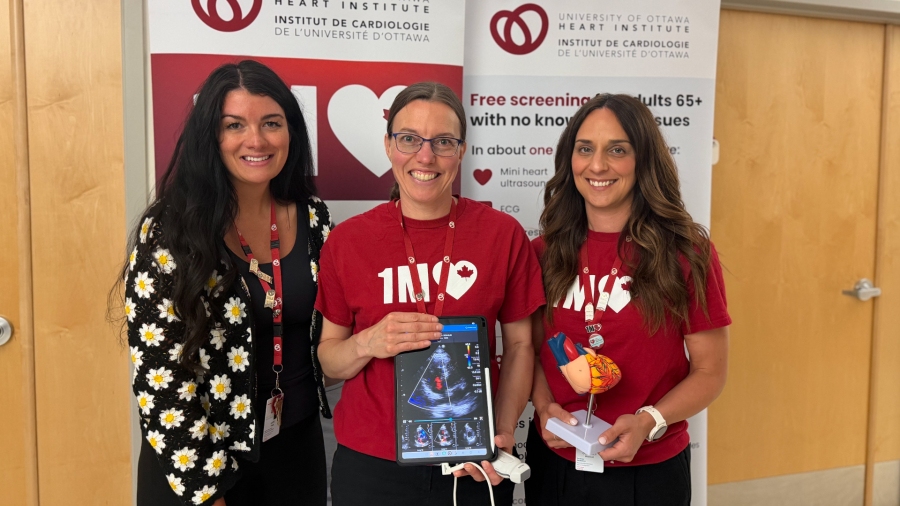
A device about the size of a smartphone is enabling cardiologists to generate images of patients’ hearts at the point of care, enabling them to make more informed diagnoses and even intervene earlier. The result? Improved care and outcomes, and possibly even reduced health care costs. The device is