

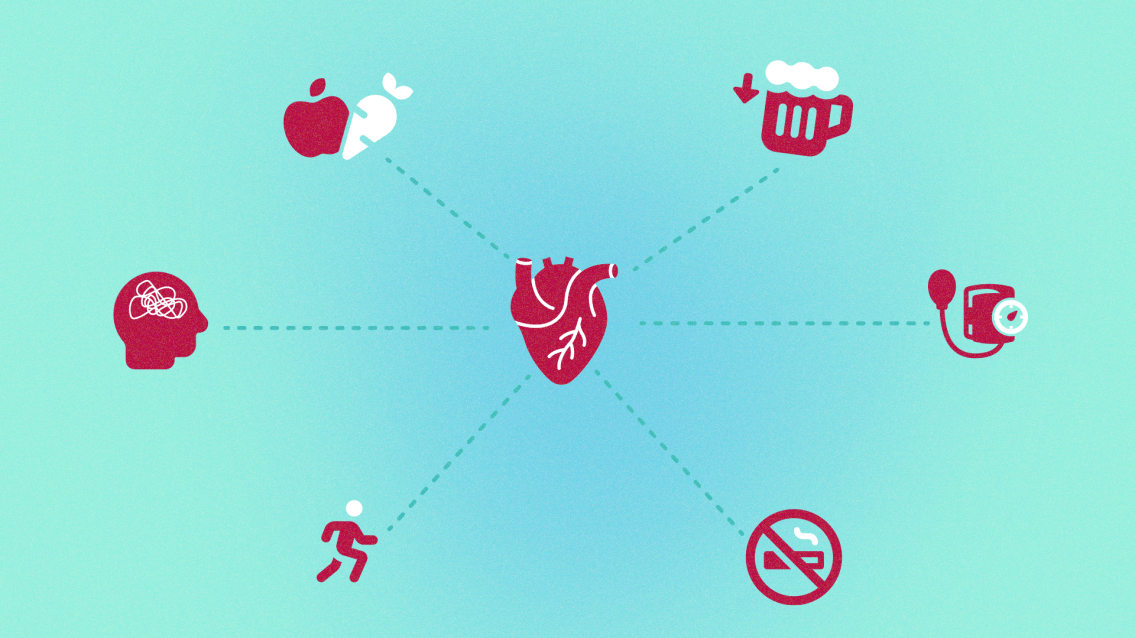
Heart disease can feel scary – but the good news is there is a lot you can do to lower your risk.
It starts with understanding your risk factors: the habits, conditions, and traits that make heart problems more likely. Some of these factors, such as age, ethnicity and family history, aren’t things you can change. Others, however, are within your control – and adjusting them can make a real difference.
In this article, we’ll touch on the risk factors you can't change, then focus on the ones you can and provide simple steps you can take to protect your heart and your health.
Non-modifiable risk factors
Your age, sex, family history and ethnicity are non-modifiable because they are outside your ability to control.
Age
- Your risk of heart disease increases as you age.
Sex
- Men over 55 have a higher risk of heart disease.
- Women have a higher risk of heart disease after menopause.
Family history
- Heart disease runs in families.
- Men have a higher risk if a parent or sibling was diagnosed before age 55.
- Women have a higher risk if a parent or sibling was diagnosed before age 65.
- With female relatives, the risk is higher in those diagnosed before menopause.
Ethnicity
- Indigenous Peoples and people of African or Asian descent are at a higher risk of heart disease.
Modifiable risk factors
Modifiable risk factors for heart disease are habits or conditions you can change, such as eating unhealthy foods, not exercising, or smoking.
Below are common modifiable risk factors that are more likely to be within your ability to control.
Lack of exercise
People who do not exercise regularly have twice the risk for heart disease compared to those who exercise regularly.
When you don’t move enough, your heart and blood vessels become weaker, your blood pressure can rise, and your chances of gaining unhealthy weight increase.
- All movement is good for your heart.
- Aim to sit less and make your heart pump a little faster each day – choosing an activity you enjoy and that fits your lifestyle helps you stick with it.
- Read our 10 tips for exercise.
Smoking
The chemicals in tobacco smoke damage your heart and blood vessels. The carbon monoxide from cigarettes damages your arteries.
- Reducing or stopping your tobacco intake is the single most important thing you can do to improve your health.
- Read our 10 tips to quit smoking.
Nutrition
The food that you eat affects many of the important risk factors linked with heart disease. For example, blood cholesterol, blood pressure, and glucose levels if you have diabetes.
- Read our 10 tips for healthy eating.
Alcohol
Low-risk guidelines recommend no more than one to two standard drinks a week. If you drink over two drinks a week, you are increasing your risk of certain cancers, heart disease and stroke.
- Read our article about how drinking less alcohol is best for heart patients.
High blood pressure
High blood pressure (or hypertension) makes your heart work harder, damages your blood vessels, and can cause plaque buildup. Your blood pressure can be high without any symptoms.
- Check your blood pressure regularly.
- Reduce your daily salt/sodium consumption.
- Try to be active every day. Achieve and maintain your personal “best weight” in the context of a healthy lifestyle. Practice stress management skills that work for you.
High or low blood cholesterol levels
Your liver produces a fat-like substance called cholesterol. Some of the cholesterol in your blood comes from the food you eat.
Two important types of cholesterol in your blood are low- and high-density lipoprotein cholesterols.
Low-density lipoprotein (LDL) is a bad cholesterol that can cause buildup of plaque on the walls of your arteries. High-density lipoprotein (HDL) is a good cholesterol.
- Eating heart-healthy food can help lower your LDL.
- Regular exercise and quitting smoking can help increase HDL.
High blood glucose
High blood glucose (sugars) can lead to prediabetes or diabetes. Having high blood glucose puts you at higher risk for heart disease, as it can lead to plaque buildup and rupture in the arteries.
- Aim to eat healthier food and be active every day.
- If you have diabetes or prediabetes, it is important to track your blood sugar levels.
High stress levels
Stress causes your body to raise blood pressure and cholesterol, which over time can lead to heart disease.
- Do activities you enjoy or that make you happy.
- Talk to someone who cares about you – a family member, friend, or mental health worker.
- Read our 10 tips for managing stress and emotional health.
Anxiety and depression
Anxiety and depression are both associated with the increased risk of heart disease. Anxiety can lead to high blood pressure and higher heart rates, which can put extra stress on the heart over time. Depression can increase the risk of plaque buildup in the arteries and blood clots.
- Get support from your family and friends or join a support group.
- Talk to your healthcare professional and ask about counselling services.
- Do activities you enjoy, even when you don’t feel like it.
- Read our 10 tips for managing stress and emotional health.
What about sleep?
Sleep is increasingly recognized as a cardiovascular risk factor, but more research is still needed to better understand the impact of sleep quality on the development of cardiovascular disease.
In the meantime, we know poor sleep can have many negative effects on our bodies, so we recommend reading our 10 tips for healthy sleep to improve your overall health.
Get screened for cardiovascular risk factors

The Ottawa Heart Institute has launched One Million Canadian Hearts, a pioneering initiative to screen one million Canadians for heart health.