

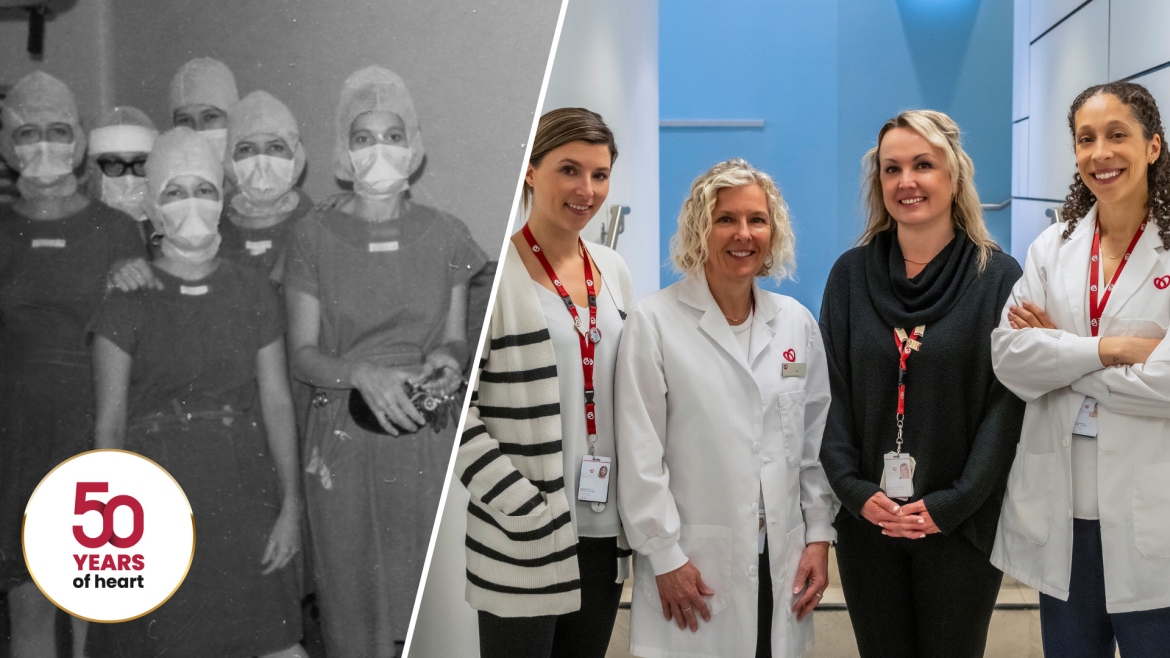
For nearly 50 years, the Ottawa Heart Institute has been at the forefront of cardiac care in Canada. But behind every surgical innovation, every shortened hospital stay, and every life saved is something as constant as a heartbeat: the extraordinary cardiac nurses caring for patients at their most vulnerable—and for each other, every step of the way.
Across generations of nurses, from the early days of open-heart surgery to today’s high-tech critical care units, a few constants have defined nursing at the Institute: a deep commitment to patient-centred care, a culture of mentorship and growth, and a sense the Heart Institute is more than just a workplace—it’s a second home, a second family.
What real nursing feels like
When Erika MacPhee first walked onto the cardiac surgery floor in 1991 as a brand-new nurse, she felt like she had “won the lottery.” She had grown up visiting the Ottawa Heart Institute as a family member, watching her grandfather receive care there. Now, she was part of that care team.
Fresh out of nursing school, she had little hands-on experience. During her interview, she answered “no” to nearly every clinical question. But one “yes”—that she spoke French—opened the door and changed her life.
“I was over the moon, like beside myself with excitement,” she told The Beat. “I went home and told my parents, ‘I got the job!’”
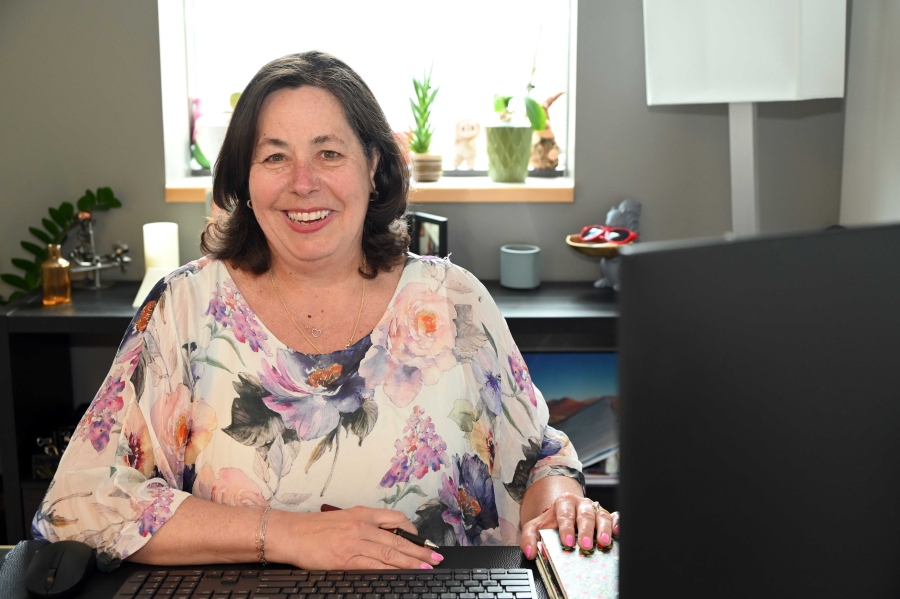
What followed was an immersion into a fast-paced, demanding environment, guided by experienced nurses who buddied up and supported her. “I was the youngest on the floor, and everyone took me under their wing,” Erika recalled. “I learned quickly, and it was amazing!”
That early support shaped not only her skills, but her understanding of what nursing could be. It wasn’t just about tasks or procedures—it was about people. Patients, yes, but also colleagues.
Decades later, that same ethos continues to define the Institute’s nursing culture.
A culture of learning—and lifting others up
In the cardiac surgery intensive care unit (CSICU), Carol McKissock, RN, has spent nearly four decades embodying that culture. After starting her career in orthopedics at The Ottawa Hospital, she joined the nursing team in the Heart Institute’s CSICU in 1988 and never left.
“I just love it,” she said. “I love taking care of patients, working with other nurses, and helping new nurses learn and grow.”
Over 38 years, Carol has mentored countless nurses. She has guided them through their first shifts, helped them process difficult cases, and built their confidence.
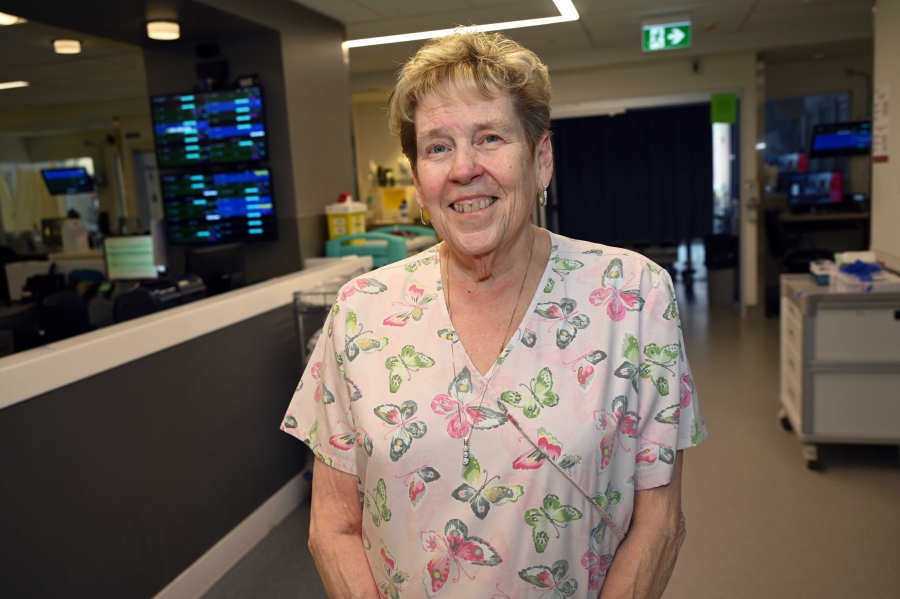
“If someone’s had a tough shift, I sit with them and go through what happened,” she explained. “Sometimes they think something was their fault when it wasn’t. You help them see clearly, and they learn from it.”
That kind of support is fundamental to helping nurses thrive. Senior nurses teach by example, creating an environment where questions are encouraged, mistakes become learning opportunities, and growth is continuous.
“She's a wealth of information, and I know I can always go to her with questions or when I need help,” said Cara Webster, RN, an early-career nurse who has worked closely with Carol McKissock, and who reached out to The Beat to share Carol’s story. “We know we can count on her to be that person. I've always thought of her as a maternal figure for our unit.”
Erika, who later became a nursing coordinator, educator, and who now serves as vice president of clinical operations at the Heart Institute, has seen that cycle come full circle. “Now, many of our managers and advanced practice nurses are people I trained as new hires,” she said. “It’s incredibly rewarding to see people you’ve trained grow into leadership roles themselves.”
Human touch in a high-tech world
Over five decades, cardiac care has transformed dramatically. Patients who once stayed in hospital for weeks after surgery are now discharged in days. Technologies like ECMO—advanced heart-lung support systems—have expanded what’s possible.
But for the Heart Institute’s critical care nurses, more technology doesn’t mean less work. As the ECMO centre for Eastern Ontario, the Heart Institute has trained its critical care nurses to run these machines—an evolution that allows highly specialized perfusionists to focus their expertise where it’s needed most.
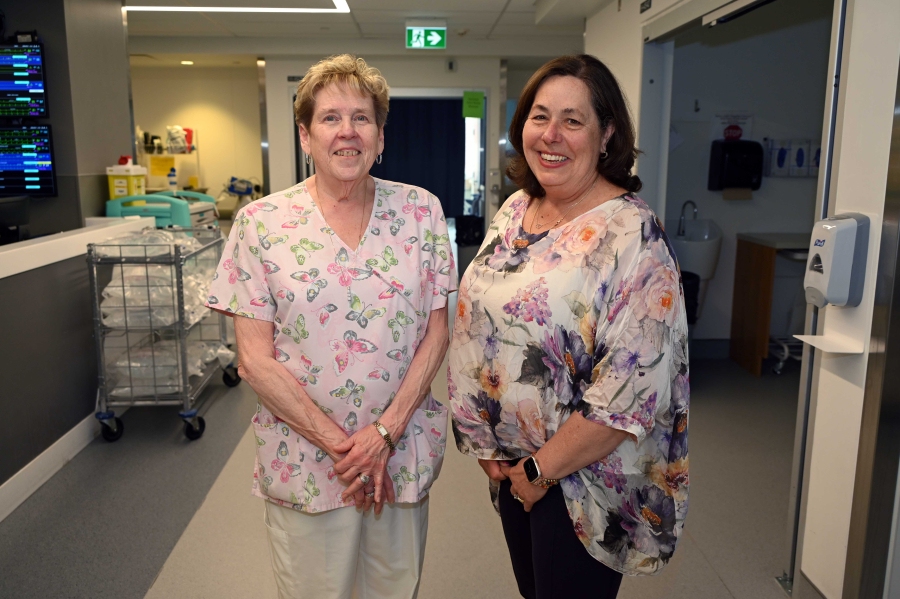
For those nurses, that shift has brought greater complexity, heightened vigilance, and increased responsibility.
“You’re constantly monitoring, adjusting, thinking,” Erika explained. “The technology doesn’t replace clinical judgment—it depends on it.”
Even smaller changes matter. For example, nurses are also trained to remove certain cardiac wires before discharge, a task which used to require a surgeon.
In the ICU, these changes are already having an impact. Nurses are mobilizing patients earlier, extubating them sooner, and helping them recover faster. Outcomes have improved significantly.
And yet, both nurses emphasize that technology can’t replace the human connection at the heart of care.
“It’s essential,” said Carol. “When I walk into a room, I introduce myself, explain what’s happening, and make sure the patient understands. Even holding their hand can make a difference.”
Erika recalled the shift to electronic health records in 2019 as a pivotal moment in the Institute’s history, notably for the impact it has had on nurses and how they deliver care. Suddenly there were screens at the bedside, and eye contact became more of an effort. The adjustment, she said, was quick and deliberate.
“You realize how important that connection is,” Erika said. “Patients need to feel seen and heard. That’s where trust comes from.”
From the moment a nurse enters a room, an assessment begins. Checking vital signs is only part of it; nurses are also reading mood, awareness, and comfort. Every detail is information that can influence care, and recognizing subtle changes remains a distinctly human skill.
Caring for patients—and each other
If patient-centred care is the foundation of nursing at the Heart Institute, mutual support is its backbone.
“Like a second family,” Carol said when describing her team. “We support each other professionally and personally. If someone’s struggling, we’re there.”
That support can take many forms. It might be encouraging a colleague to take a break or sitting down after a difficult case to talk it through. It might mean celebrating milestones together or simply being present when someone needs to talk.
For Erika, that sense of community has been constant throughout her career. “It really is a family,” she said. “We’ve celebrated life events together, supported each other through challenges, and grown together.”
Even as the workforce evolves—with new nurses bringing fresh perspectives and experienced staff retiring—the core values remain intact.
“There’s a great balance now,” she said. “New nurses bring energy and new ideas, and we share our experience. We learn from each other.”
A home for your heart
Ask any nurse at the Heart Institute what keeps them here, and the answer often comes down to a feeling.
“It’s like home,” Erika said. “Comfort, pride—it’s my second family.”
“It’s given me happiness,” Carol said. “I have always felt proud to be a nurse.”
Carol is now preparing for retirement—she will work her last shift later this month—though she knows she won’t fully step away. She is already planning to volunteer in nursing homes, spending time with elderly patients. A nurse is always a nurse.
As the Ottawa Heart Institute marks its 50th anniversary, technology will continue to evolve, and the pace of care will continue to accelerate. But the heart of nursing here—patient-centred, collaborative, and deeply human—will remain unchanged.
And for those who walk its halls each day, that’s what makes all the difference.
The Ottawa Heart Institute is celebrating 50 years of heart in 2026. Visit our anniversary webpage!
Never miss a Beat
Want interesting stories like this delivered straight to your inbox as they happen?
Subscribe to our mailing list