


Purpose
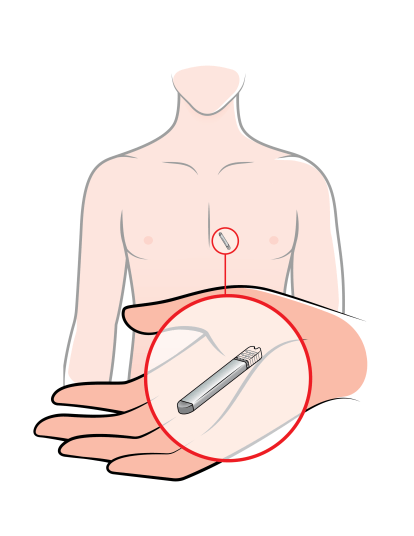
An implantable loop recorder (ILR) is a small device that is placed under the skin of the chest to continuously monitor your heart's rhythm. The device is used to detect abnormal heart rhythms (arrhythmias) that may cause symptoms, such as fainting, dizziness, or palpitations. It can help doctors diagnose heart conditions that they may not detect with routine tests like electrocardiograms (ECG) or Holter monitors. This implant is different from a pacemaker and does not enter the heart or control heart rate.
Description
The ILR continuously monitors the electrical activity of the heart and can function for extended periods (months to years). The device stores data and can transmit it to the pacemaker clinic to provide information that may help to diagnose an arrhythmia. The device automatically records some arrhythmias, but patients can also manually trigger the device to store an event if they experience symptoms.
The device is usually not noticeable in daily life and does not interfere with most activities.
During the procedure
- The implant procedure will take place in a room called the electrophysiology lab. There will be a team of doctors, nurses and lab technologists involved in your procedure.
- A nurse will wash your chest area with a cold solution and will place sterile sheets over you. It is important that you don’t move or touch the top of the sheets once they are in place. A nurse will be available to assist you if you have any concerns during your procedure.
- During your procedure, you may receive medications in your intravenous for discomfort or to help you relax, as needed.
- A nurse will administer a local anesthetic (freezing) to the planned implant site to numb the area.
- Once the anesthetic has taken effect, the doctor will make a small incision and insert the device under your skin. It is essential you remain as still as possible during the procedure. It is common to experience a pressure sensation during the implant. The local anesthesia should prevent pain.
- Once the procedure is finished, the care team will close your incision with dissolvable stitches. These will dissolve on their own over the next couple weeks. Your care team will place a small sterile dressing over the wound.
- This same procedure will take place to remove the device when it is no longer required.
Patient instructions
Before the procedure
- Receiving an implantable loop recorder is a day procedure. This means you may go home the same day. The procedure itself is short (45 minutes), however, you should plan to be at the Heart Institute for most of the day, as there may be delays in the schedule because of other emergencies.
- Once you are in the Day Unit, the final preparations for your procedure will start. You will change into a hospital gown. You will have a small intravenous tube placed in your arm. The implant area will be clipped of hair and cleaned. Before you go for your implant, the nurse will review the procedure with you in the Day Unit. This will be a good time to ask any questions you may have.
After the procedure
- After your procedure, your care team will take you back to the Day Unit on a stretcher or bed. You may be connected to a heart monitor that will keep track of your heart rate and your blood pressure.
- Your care team will need to monitor you for one hour after your procedure. After that, you may go home, however, you will need someone to drive you.
- You may have some discomfort over the insertion area after the procedure. This is common and should resolve over the next two weeks.
- Avoid submerging your chest in water for at least two weeks.
Follow up
- Before you leave the hospital, your care team will give you a device called a transmitter to place beside your bed at home. Prior to leaving, you will receive instructions regarding how to use the device and how to make a recording.
- If you plan to travel, you can bring your transmitter with you and transmit the data with an internet connection.
- Your health care provider may ask you to keep a diary of your symptoms so that you can discuss what was happening when the episodes occurred.
- You will need to have checkups in the device clinic once or twice a year while the device is in place.
Risks
Complications of the procedure are uncommon. As the wound heals, check the skin for symptoms of infection, such as redness or swelling.