


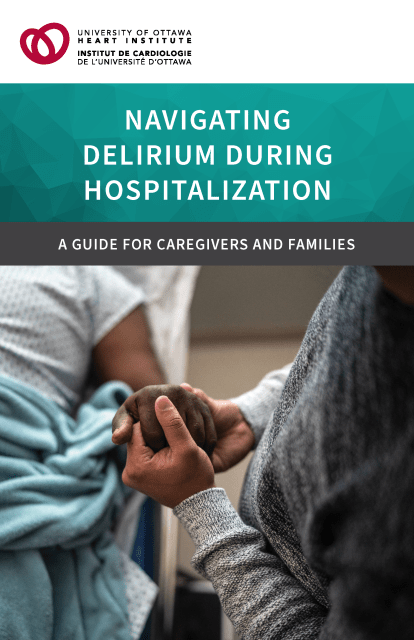
Navigating delirium during hospitalization is a guide designed to support caregivers and families of hospitalized patients with delirium.
Download the guide
On this page
What is delirium?
Delirium is a sudden state of confusion. It may cause people to:
- Not think clearly
- Have trouble paying attention
- Have a hard time understanding events around them
Delirium is different from dementia.
Delirium is typically temporary, lasting between a few hours to several days, and comes on suddenly. Delirium usually has a reversible cause, and symptoms may come and go throughout the course of the illness.
Dementia is a permanent condition that develops slowly and that gradually worsens over months or years.
How common is delirium?
Delirium is a common occurrence for patients admitted to hospital, especially in the intensive care unit (ICU) and after cardiac surgery.
Up to half of all patients experience delirium at some point during their cardiac hospitalization, and two out of every three patients in the ICU may develop delirium.
Delirium can also occur at home, before someone is hospitalized, but this is less common.
What are the signs of delirium?
Signs of delirium can differ between people and can change throughout the day. People with delirium may:
- Not know where they are, why they are at the hospital, or what day it is
- Have trouble following a conversation or directions
- Say things that do not make sense and/or use inappropriate words
- Be more forgetful than usual
- See or hear things that are not there
- Experience changes in eating or sleeping habits (e.g., they may sleep during the day and be awake at night)
- Experience changes in behaviour (e.g., becoming quieter and withdrawn, or hyperactive and louder than usual)
- Feel more stressed, anxious, or restless
A key feature of delirium is its fluctuating nature. In some cases, patients may experience a period of clarity, where they briefly regain normal thinking and awareness, while still being confused at other times.
What causes delirium?
Delirium can occur when there is a change in the way the brain is functioning due to:
- Illness (e.g., heart failure) or infection (e.g., urinary or lung infection)
- Surgery and other procedures that temporarily change blood flow to the brain
- Effects of some medication(s) and anaesthesia
- Withdrawal from nicotine, alcohol, or other drugs
Delirium can also be made worse by fever, extreme pain, lack of sleep, dehydration, malnourishment, or constipation.
What are the risk factors for delirium?
The following factors can increase the risk of delirium:
- Age 65 years or older
- Pre-existing cognitive impairment, dementia, or depression
- Having experienced delirium before
- Having more than one serious medical condition
People with delirium may act out of character from their normal behaviour or personality. It is important to remember that these are symptoms of delirium and are not voluntary or intentional.
How is delirium managed?
Delirium is managed by treating the underlying cause(s) and alleviating the symptoms. The care team also uses supportive measures to keep the patient comfortable and safe. Medications may be prescribed to manage severe agitation or distress.
Supporting a hospitalized patient with delirium
Whether you are a family member, friend, or caregiver of someone experiencing delirium while hospitalized, there are many ways you can help.
Supporting them during and after the episode of delirium can aid their recovery and reduce distress, while also giving you a sense of control in an unpredictable situation.
You should consider speaking with the primary nurse before visiting the patient. For example, the nurse may tell you the patient had a night of confusion and needs rest prior to a family visit.
Support during delirium
1. Communication and orientation
- Speak softly and use simple words or phrases. Be calm, comforting, and offer gentle reassurance.
- Patients with delirium may not recognize their loved ones or other important people in their lives. Use cues or reminders of who you are and your relationship with them. Remember that their forgetfulness is due to delirium.
- Provide frequent reminders of where the patient is and why, and the date and time.
- Do not argue with false beliefs, as these thoughts are real to the patient. Instead, provide reassurance and emotional support.
- If they become fixated on a distressing topic or are confused, change the subject. For instance, you can acknowledge their emotions (e.g., “I know you’re frightened/angry”), explain how the situation is being managed, and then encourage them to talk about something else (e.g., ask about family or interests).
2. Create a familiar and comforting environment
- Bring essential items like glasses, dentures, and hearing aids to help them stay oriented and engaged.
- Decorate the room with familiar items, such as posters or family pictures, to remind them of home. Make sure to consult with their care team to ensure items conform with hospital policies.
3. Provide comfort and reassurance
- Sit with them to help keep them calm. Offer physical touch, such as a hug or gentle handholding. Talk to them about family, friends, or other familiar topics.
- Reassure them that they are safe and that you and their care team are working towards helping them feel better.
4. Ask for help from the care team
- If they are trying to get out of bed or the chair unassisted, let the care team know so they can assist. Do not try to assist them yourself as this will increase the risk of a fall and/or compromise the healing of surgical incisions.
- If you notice further changes in their behaviour, please let the care team know.
Support after delirium
- Avoid reminding them about the things they said or did during an episode of delirium. It can be frightening or embarrassing for them to hear about it.
- Reassure them that delirium is a medical condition. Remind them that what they experienced or did during that time does not reflect who they are as a person.
- Help them clarify reality if they are unsure whether a memory or experience was real or part of the delirium episode. Gently offer to explain what actually happened.
- Introduce grounding techniques to help them reconnect with the present moment and reduce emotional distress. For example, use the 5-4-3-2-1 exercise: Ask them to name 5 things they can see, 4 things they can touch, 3 things they can hear, 2 things they can smell, and 1 thing they can taste.
- Encourage them to talk to a healthcare provider, who can help explain what happened and answer questions.
Our priority is to ensure that patients are safe and well supported before being discharged from hospital. Once they are home, someone familiar with the patient should continue monitoring them closely for signs of delirium, as symptoms can sometimes return.
If a patient shows symptoms of delirium at home, including after discharge, follow the guidance on this page and immediately notify their primary care provider or other healthcare provider involved in their care.
If this is not possible, consider seeking emergency medical care, especially if symptoms are worsening and the patient is unable to care for themselves safely.
More information about delirium
Please speak with a University of Ottawa Heart Institute care team member if additional support is required for a patient, family member, or caregiver regarding experiences with delirium while hospitalized.
More information on this topic can be found at:
• Canadian Coalition for Seniors’ Mental Health
• Critical Illness, Brain Dysfunction, and Survivorship Center
• Regional Geriatric Program of Toronto
• Association des médecins psychiatres du Québec (in French)
• Centre hospitalier de l’Université de Montréal (in English)